Newsroom

Why – and How – to Buy a Yacht with Partners

Why – and How – to Buy a Yacht with Partners

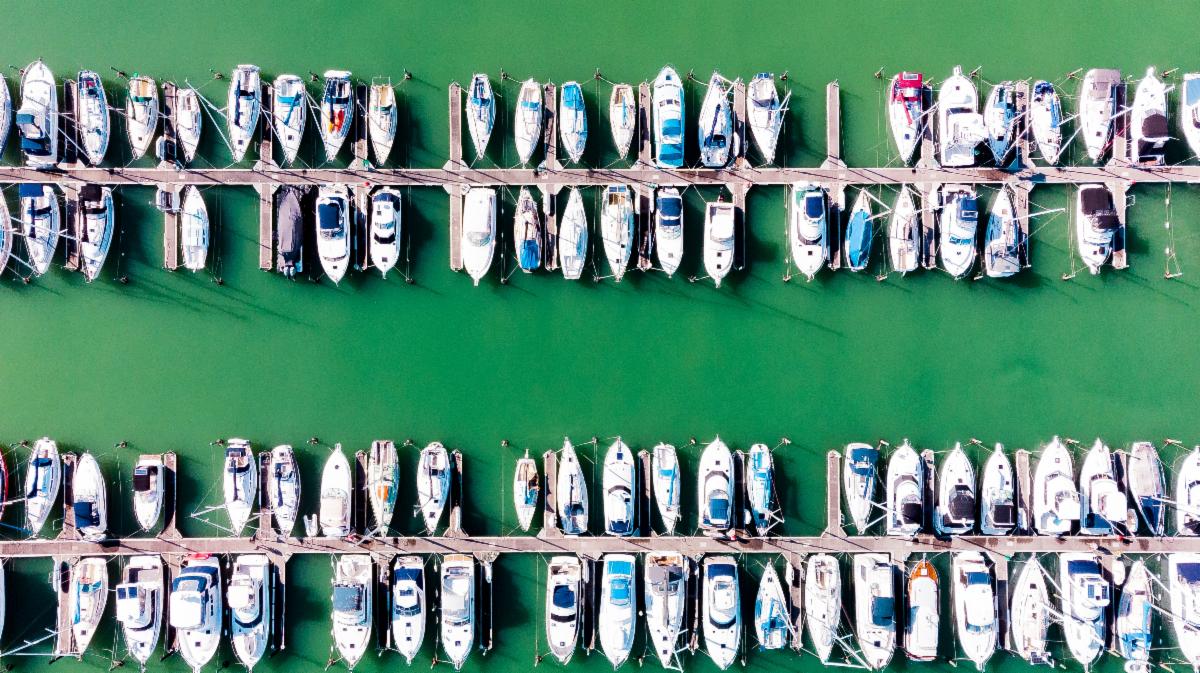
Stroll any dock at any marina virtually anywhere in the world. 
What do you see?
Dozens…hundreds…even thousands of boats sitting peacefully at the docks. And most of them never, ever leave the slip.
If you could ask their owners why, you’d hear a predictable story. Nearly every owner could point to a specific trip, experience, or outing that convinced them that owning a boat was a great idea. And then something happened.
Perhaps the job got in the way of the dream. They simply couldn’t find the time to get away more than a few days a year, and they simply aren’t using the boat.
Or perhaps it was the cost. Maintaining, insuring, and operating the boat was more time-consuming and expensive than they thought it would be.
Ads for partnerships in assets like vacation condos and airplanes appear all the time in the Wall Street Journal. Regular use is actually good for an asset. Condos benefit from airing out. Equipment runs better when it is used regularly.
Wouldn’t a large asset like a yacht benefit more from use than it would sitting alone and forlorn at the dock?
So why not consider buying a yacht with a partner or partners?
There are many advantages to joint ownership. Here are just a few of the more obvious ones.
  1. Shared initial investment. The initial purchase price of a new yacht can be intimidating for some people to take on alone. Finding a partner (or several partners) reduces the purchase price for each partner to a fraction of the total.
  2. Shared monthly/annual expenses. You’ll need to keep that new yacht in a slip somewhere. You’ll also need to insure it. A partnership means sharing the monthly or annual costs among the partners, reducing the costs for each individual.
  3. Shared maintenance burden. No doubt about it, a new yacht needs regular maintenance. In addition to routine washing, polishing, and waxing the topsides, there are oil and fluid changes, regular systems checks, bottom and running gear cleaning and maintenance to contend with. Shared ownership can mean shared maintenance responsibilities.
  4. Shared tax benefits. It’s possible, if your partnership agreement is structured correctly, that you and your partners can take advantage of certain tax benefits to owning a yacht, particularly if you use it in your business activities.
  5. Shared experience. If you are in a partnership group that’s based on common interests, you and your partners can share in the joys of those interests while sharing ownership of the boat. For example, if you and your partners are all fishermen, divers, or wake boarders, sharing the yacht supports you in pursuing those interests together.
Buying a yacht with partners requires the right match of personalities and a common activity.
But before any money changes hands toward the purchase of shares in a new yacht, you and your partners need to sit down and come to an understanding about how your partnership is going to work, including everything from maintenance costs and labor to scheduling or selling your share when you’re finished.
Everything needs to be spelled out clearly, in writing. 
And for that, you’re going to need a lawyer to help you put it all together. Don’t just ask your sister’s husband’s cousin the lawyer – find an attorney who’s familiar with the yachting or marine industry to make sure everyone and everything is covered. Your yacht broker can make recommendations.
Here are a few considerations to include in your agreement:
Determine a co-ownership structure. You can choose from among several possibilities including joint ownership, a simple partnership, an LLC, or a corporation. Often an LLC (Limited Liability Corporation) works best for yacht partnerships. A sort of hybrid between a partnership and a corporation, an LLC offers flexibility, limited liability, and tax advantages to partners without being overly cumbersome or expensive to administer.
Spell out the details of the boat and all of the equipment included in the agreement. List the manufacturer, model, size, and serial numbers of everything, including engines, dinghy, and navigation equipment. Also list everything on the boat that is not included as part of the agreement like bikes, linens, binoculars, or other personal equipment or gear.
Determine how to document and pay expenses. It’s important to spell out, in detail, how regular fixed expenses like moorage, insurance, scheduled maintenance, and taxes will be collected and paid. Likewise, spell out in detail how you will deal with ongoing operating expenses like fuel, oil, oil changes, maintenance, repairs, routine haul out, and home port water, electricity, and internet. Will the owners share these costs equally, or proportionally, according to their use? Will partners do their own maintenance, or will the partnership use a certified marine mechanic to do routine maintenance? If everyone is clear in advance, nobody gets surprised or caught short.
Determine how to schedule time on the yacht. How do you determine who gets the boat and when? Depending on the number of partners involved, you might want to divide the year into two-, three-, or four-week blocks, allowing each owner to choose one or two primary and one or two secondary blocks of time during the year. All it takes is a commitment to communication, flexibility, and cooperation. There are online calendars and software solutions that can help with scheduling, as well as yacht management services that will gladly help you work out your scheduling, for a fee.
Determine operational limits. What is the cruising limit for the yacht? How far from the home port may partners take it? Your insurance policy will have an impact on the answers to those questions. Who is allowed to operate the boat or take it out? Can a partner or co-owner “lend” his time to a relative or friend? What qualifications does the operator need to have? What is the required minimum crew?
Define partner’s or co-owner’s operational responsibilities. These responsibilities might seem self-evident, but your partnership agreement should specify that partners must operate the yacht in accordance with the official Rules of the Road, the COLREGs (International Regulations for Preventing Collisions At Sea), state and local laws, the insurance contract, and the boat and equipment operating limitations.
Establish and define yacht policies and procedures. Are pets allowed aboard? Are cigars permissible on the aft deck? What condition should an owner leave the boat in when finished with his or her time aboard? What standards of cleanliness are expected? What supplies must be replenished? What happens if an owner or guest breaks something? What’s the yacht’s policy about upgrading or replacing worn or outdated equipment? How is the ship’s log to be kept and maintained, and what information must be included? While you certainly can’t plan for everything, the more clearly you can spell out your policies and procedures, the less confusion and misunderstanding you’ll experience.
Establish and define record-keeping procedures. Determine who is responsible for maintaining complete business and accounting records of all co-ownership affairs. Who is responsible for the safekeeping of registrations, certificates, bill of sale, or any other documentation relating to the purchase, registration, or sale of the yacht and any major purchases?
Define the exit strategy. What happens if a partner wants or needs to sell his or her share? Do the other partners have the right of first refusal? If they don’t want to buy the partner out, do they need to approve any new buyer? What happens if a partner or co-owner needs to just walk away due to health, loss of income, or even death?
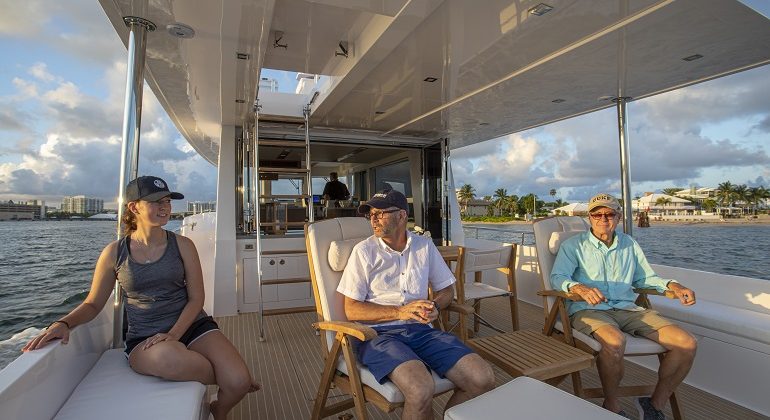
We know that’s a whole lot to consider. But you don’t have to struggle through it alone.
If you’ve never bought a yacht in partnership before, we at Outback Yachts can offer insight and advice, and point you toward professionals who can help you structure your partnership in a way that suits you, your potential partners, and your boating lifestyle best.
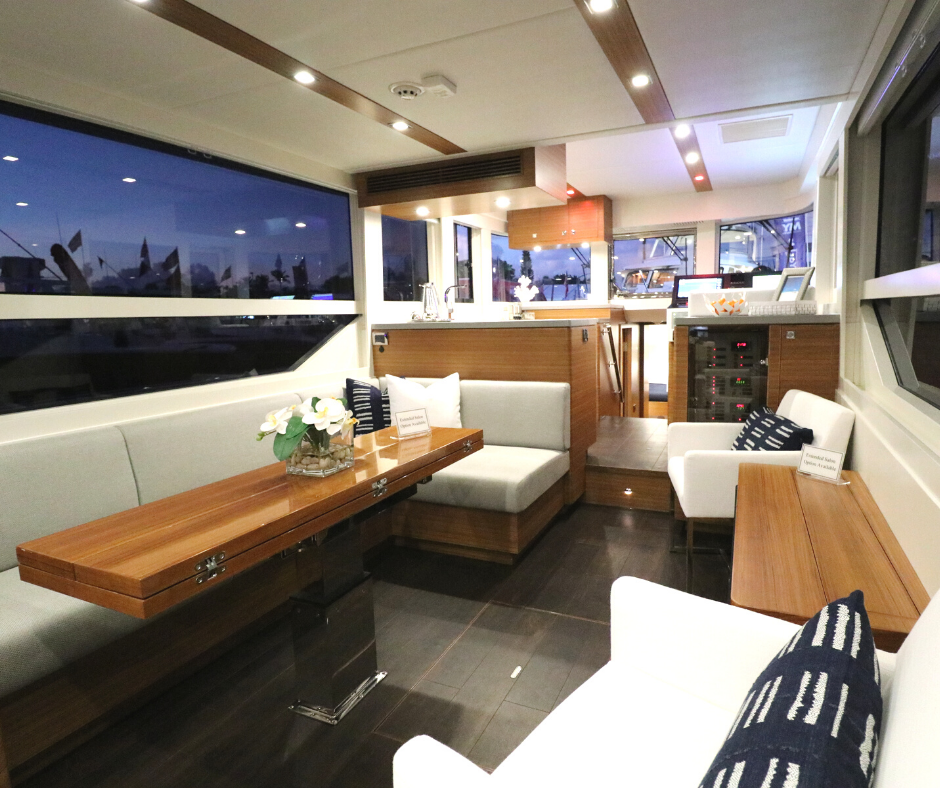
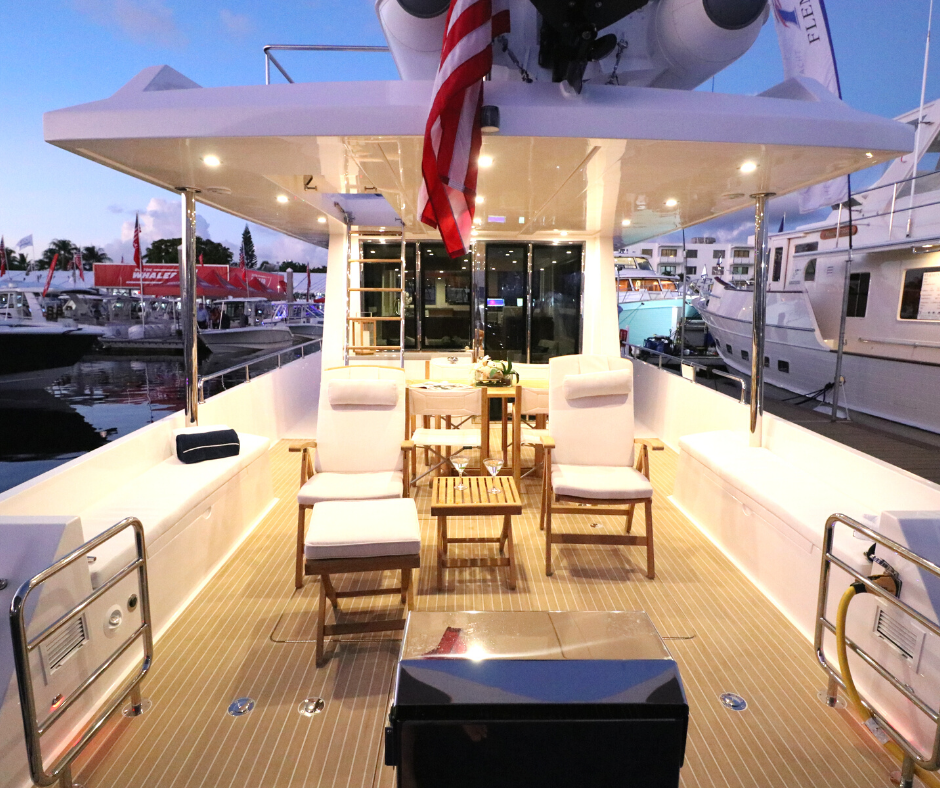
And we’d be delighted to help. We think buying an Outback 50 in partnership with like-minded active boaters might be one of the best ways to enjoy this revolutionary, one-of-a-kind yacht.
Drop in or give us a call at either our Ft. Lauderdale (954-224-3933) or Newport Beach (949-673-5401) office to chat about the possibilities or schedule a trial run.